





-popup_image.jpg)





I came across an interesting website quite by chance the other day. Run by homebrewer and software engineer, Christian Scheb, Beer Analytics provides a database of well over a million recipes from the homebrew community. Alongside those recipes, Christian has pulled out some fascinating, up-to-the-minute analytics about trends. I presume that data is global in nature since it’s derived from Google search information.
The most searched hops, current to April 2026, was of particular interest. Mosaic topped the table, followed by Citra, Cascade, Nelson Sauvin and Amarillo. It felt like Nelson Sauvin was the newcomer there. The New Zealand hop has been around for more than 20 years, but it still doesn’t feel quite as established as its American counterparts in the public consciousness. This broad-brush analysis of which hops people are looking up got me wondering about what is actually going into the ground this year.
The blossom has all fallen from the pear tree in my garden now, and the first hop shoots are appearing in British hop fields. It seemed like the perfect time to catch up with hop specialists Charles Faram. I spoke to group technical director Will Rogers to see what is being planted on UK hop farms this season.
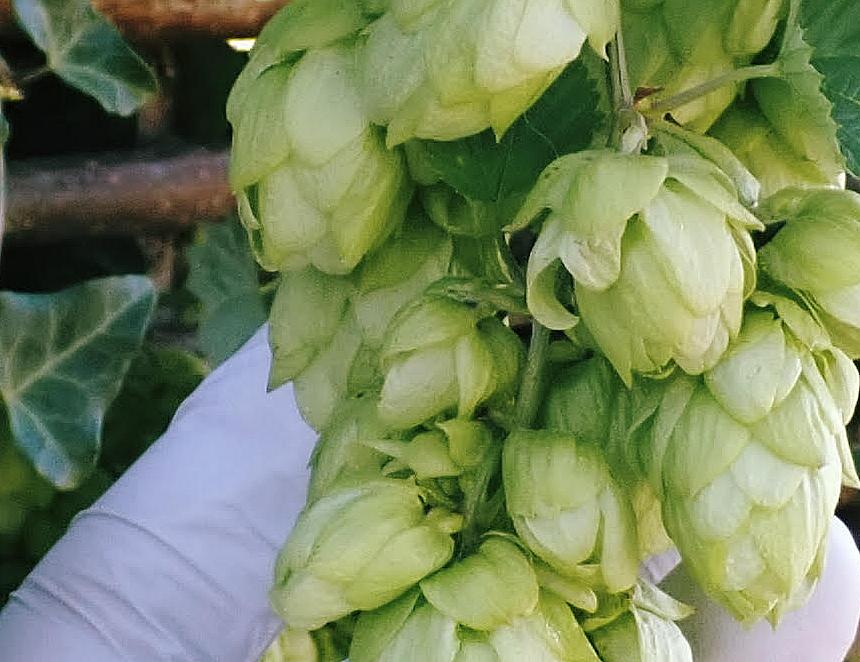
The big news is really that a lot more Harlequin has been planted this year, doubling the previous acreage. Described as “one of the most exciting breakthroughs in British hop breeding”, surely everyone has by now tried at least one beer containing this fruit-forward hop. Faram has developed a virus-free variant that should establish more quickly and grow more vigorously. Will estimates that in the next four or five years, Harlequin will be the largest UK variety.
The new Harlequin plantings are an attempt to catch up with the latent demand among brewers at home, but small parcels of hops have also been sent to brewers in Europe and the US. It’s great to hear that there is potentially a global interest in this thoroughly British hop – but of course it will be important to ensure there is enough for British brewers before the focus broadens out to worldwide customers.
Next up, Will tells me that increasing amounts of Hersbrucker, a traditional German variety classically grown in Hallertau, are being planted here too. It’s slightly problematic as it hasn’t been bred for disease resistance, but a UK-grown Hersbrucker holds a lot of charm for brewers that want to make, for example, a helles-style lager, but with local ingredients.
In its home environment, Hersbrucker has been struggling somewhat. Climate change has seen yields vary wildly, as well as the oil and alpha acid content of the harvested hops being subject to significant variation. A UK-grown, consistent Hersbrucker harvest may actually solve problems for brewers on the continent too in future years.
Another hop of note being planted is Phoenix. It has a soft, sweet, molasses-like character and a hint of delicate spice. That means it works well in beers with darker, richer malts and the oily nature of the hop can add to the mouthfeel of the beer. This tracks beautifully alongside the current resurgence in the popularity of stout, particularly nitro stouts but also cask variants.
Finally, it’s always exciting to hone in on Charles Faram’s hop breeding programme and find out what new hops we can expect down the line. At the moment, there are two experimental varieties that are showing promise. CF310 goes big on pine flavours, with hints of passionfruit and citrus. CF321 is more complex, with tropical notes, orange and citrus plus a light taste of coconut also coming through in some brews.
The experimental hop breeding programme usually takes around five years to bring a variety to market, and these two varieties are already several harvests in. Brewers have been appreciative of their quality at Aroma Fests and test brews with the likes of Buxton brewery and Utopian Brewing have been well received by consumers. Will is hopeful that they will prove themselves once and for all at the next harvest and be ready to receive a proper name and make their way on to the market.
There is lots of positive, exciting news here. It’s fantastic that more British brewers are choosing our homegrown hops, but we are still importing far more hops than we grow. To face the stark reality, the UK acreage of hops has halved since Covid. While programmes like Charles Faram’s and other hop merchants are helping to increase the area under bine in the UK, the industry still faces a precarious outlook. It’s vital that we all familiarise ourselves with these British-grown hop varieties and, more importantly, drink the beers that are made with them.