
CAMRA is considered one of the most successful consumer organisations across Europe. Founded by four real ale enthusiasts back in 1971, today we represent beer drinkers and pub-goers across the UK.
Our vision is to have quality real ale, cider and perry and thriving pubs in every community. Our mission is to promote and advocate:
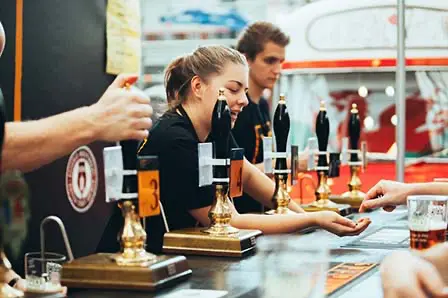
We do this by supporting and encouraging the beer and pubs trade by running beer festivals, lobbying Government for change, running numerous awards and developing bespoke pub finders and guides.
There’s plenty for everyone, whether you’re a dedicated campaigner, a beer connoisseur looking to learn more about beer or just want to meet up with friends in your local. Why not join the beer movement?
We are launching our new three-year strategy which sets out how and why we campaign, how we engage with our members and how we will reach new audiences.
A central part of the new strategy is how you – as our active campaigners – are essential to our success.
Without our branches holding events, recruiting new members and campaigning at local, regional and national level we would not have secured the changes we have over the last 55 years.
By empowering branches to use this framework to deliver our vision and aims, we are stronger collectively; while making sure we stay the leading authority on pubs, pints and people.
Every organisation needs a strategy to achieve its vision and objectives. It makes sure that we stay focused and use our resources effectively.
The National Executive, as the Board of Directors, oversees developing a strategy in line with the vision and objectives in our Articles of Association.
This strategy isn’t a single document, but a strategic approach and framework for everything we do.
Firstly, there’s some very important things that the new strategy doesn’t change which are our core vision or the fundamental mission and objects that are enshrined in our Articles of Association.
The strategy establishes a clear framework to:
Over the last decade, we’ve seen that the world can change very quickly. That includes the beer and pub world, and wider society.
A slightly shorter strategy period helps keep us more agile and requires us to assess our position more frequently, which is a good thing.
We elect members to the National Executive to make strategic decisions and plans and secure our finances and resources to do that. A shorter plan period, with improved evaluation, will help the National Executive focus on their role to strategically steer our Campaign.
The National Executive has adopted this new strategy, so implementation starts now.
This is the start of the process to engage with members on how the new strategy will work and help our committees as they develop operational plans to deliver it.
We will share a plan for how we will work with regions and branches, so we can all achieve the aims of our new strategy.
We will also be offering online sessions to talk you through the strategy, talk you through the reasons for change and, most importantly, what your role is.
The strategy is a UK-wide framework for our campaigning. It emphasises that we achieve our aims through lobbying across a variety of policy areas that apply to all, or some of, the constituent UK nations in different ways.
There are distinct and very pressing campaigning priorities in the devolved nations, where we have volunteers with a wealth of first-hand campaigning experience, supported by our Campaigns and Communications Team.
There are also different challenges to membership recruitment and retention, as there are subtle variations in the application of our membership offer in Northern Ireland, Wales and Scotland.
Our regional leaders and their branches are best placed to develop and run their campaigns and initiatives in conjunction with our committees and staff team. Those committees will now be responsible for creating operational delivery plans within the new strategic framework.
As previously mentioned, the new strategy is a framework, rather than a contract or set of instructions. It’s designed to empower volunteers to campaign and focus our attention and resources on achieving our aims. It also encourages activities and initiatives at a local level, on issues that impact your branch and area.
Because of that, it’s not an exhaustive list of policies, initiatives or events that we pursue. The next stage of the strategy is implementation, where our committees will be drawing up operational plans, which will have more detail on specific campaigns or priorities.
The framework has been developed to empower branches to make decisions and get on with grassroots campaigning.
The National Executive has been working on the strategy for over a year. We started from a 'blue-sky' style strategy discussion, and agreeing core principles to base the new strategy on.
From there, we engaged key committees to apply the principles and give feedback on the aims and activities that are most important to us as a Campaign. Prioritising and focusing our activity is essential for our ongoing success.
Those priorities were then turned into full strategy proposals for the National Executive and Regional Directors to consider, and the results of that consideration form the strategy and supporting documents that we’re presenting now.
At all stages of the process, we’ve continued to listen to our established feedback and consultation loops. Those are from branches, Regional Directors and our committees, through the Directors who lead them.
Our main committees and Regional Directors have had extensive input into the strategy, which is a framework for everyone to campaign within, rather than an exercise that’s changing our core aims or vision.
We’ve continued to listen to our established feedback and consultation loops. Those are from branches, Regional Directors and our committees, through the Directors who lead them.
The new strategy isn’t a single document and doesn’t change our core vision or the fundamental mission and objects that are enshrined in our Articles of Association.
The new strategy is a framework for everyone to work within, and to empower branches to make decisions and get on with grassroots campaigning.
We’ve also chosen a framework that allows us to measure success in more intelligent ways, so that the National Executive and strategic committees can track our progress and adjust as needed.
The new strategy is being presented this weekend and has gone through a thorough consultation process with Committee Chairs and Regional Directors. However, we’re still listening to views, and we know that ideas from members will be vital to the next stage of the process when our committees will develop the operational plans that sit under the new strategy.
We started from the base that we want the Campaign to be an effective campaigning organisation that has the foundation and resources to achieve our aims.
A part of that was making sure that our strategic framework helps us operate in a way that reflects wider society.
To do that, we looked at the external consumer environment, including:
The strategic intentions are the aims that we have set for the strategy itself, rather than CAMRA’s overall vision and objectives:
Our vision is to have quality cask beer, cider, perry, and thriving pubs and clubs in every community across the UK.
Our objectives are:
The strategy is designed to deliver our vision and objectives, but the intentions are about the specific way we want the strategy to achieve that.
The intentions are the base of how the strategic framework will work and will cover the type of organisation we want to be, and the ways that we secure our finances and resources to be most effective.
They were informed by the challenges we know we face, including the wider consumer environment and prevailing issues facing membership organisations.
This means finding new experiences and products to offer people. That could be our online guides and tools, our physical products, experiences at our festivals, or new ways of campaigning and volunteering.
This is about aligning our activities and initiatives with how modern consumers engage in the beer and pub sector, but in the wider world too.
We mean moving beyond a single focus on membership numbers to look at how people interact with us.
Previously we've focused solely on recruiting and activating members, but there are thousands of people who interact with CAMRA every day who could be encouraged to join in the future.
There’s more detail in the next section of these FAQs.
The new strategy lays out a framework for how we will achieve our vision and objectives.
From reviewing our actions and progress over the last few years, we are delivering a lot of different projects both in branches and at UK level, but we could achieve more if we focussed our attention and resources on the most effective projects at any one time.
That means prioritising at every level and also giving you – our campaigners and branches – control of the main things that you want to focus on. This is particularly important in Scotland, Wales and Northern Ireland where there are different campaigning priorities and applications of our membership offering and benefits.
An ‘Interaction Ladder’ is an engagement concept that is used in a lot of charities, campaigning groups and businesses.
It focusses on building relationships with your audience over time and increasing their commitment to your organisation.
It’s a perfect fit for membership and volunteering organisations as it focusses on the quality of relationships and interactions with members, rather than just a raw and transactional increase in numbers.
The ladder works on the basis that your audience will have different levels of relationships with, and entry points into, your organisation. You look at those audiences and entry points and consider how you capture their interest and then move them ‘up’ the ‘Interaction Ladder’ to convert that interest to impact.
For us, that’s driving interactions to encourage consumers to take the next step. That could be from a casual observer or user of CAMRA products to, for example, a festival attendee, an Explorer Pass user, a member, or a volunteer and campaigner.
Transforming from a "membership-driven" to an "interaction-driven" organisation is also a core part of the new strategy. This change does not mean that we stop being a membership organisation, but it does mean that we value and measure our success by interactions and other means than just membership numbers.
We want to convert as many beer drinkers and pubgoers as possible to CAMRA members, and we want our members to become active volunteers and campaigners. That can be financially through membership fees, products and festivals, and/or through their time and expertise.
The ‘Interaction Ladder’ approach focuses us on those conversions and interactions.
We want branches to be empowered to make decisions and choose what you want to focus your grassroots campaigning on.
The ‘Interaction Ladder’ concept sits well alongside our natural instincts for campaigning – engaging with people, recruiting members and activating volunteers.
People are central to our Campaign. The ‘Interaction Ladder’ complements this well, and helps us all focus on the quality of our interactions with people, whether that’s recruiting, activating or selling festival tickets and products.
We want to help branches to adopt the approach through engagement with, and support from, Regional Directors.
Now that we’ve agreed our new strategy, we’re presenting it at Members’ Weekend and moving into operational delivery.
We will use the strategic framework to develop operational plans to deliver activity and campaigns to achieve strategic objectives.
Those plans will be developed with our committees, supported by staff, and will be approved and reviewed as part of our annual budgets and planning cycle.
Regions and branches will be supported to adopt the framework to ensure activities, events and festivals use the new approach to interactions and engagement.
The strategy is a framework rather than a set of instructions, and we want it to empower branches to make their own decisions about their campaigning.
We’ve designed the framework to be translatable to a local level.
Our pillars of ‘Pubs, Pints and People’, clear and measurable campaigning aims, and the idea of driving interactions and engagement, have been chosen as concepts that should be easy to translate and put in place at every level across the Campaign.
This means choosing your own local campaigns and deciding what you want to prioritise and develop to achieve our goals.
Some of our most successful campaigns have come from locally devised ideas, and the sum of our local campaigning translates into immense power for us at a UK level.
We want to provide a framework that makes us as effective as possible and maximises the resources that we have, with our volunteers being the most powerful one.
The strategy is a framework for everyone to plan, deliver and prioritise campaigning.
It’s not a contract or set of instructions to branches.
You should use this framework to make decisions on what your branch wants to campaign on, focus on a small number of priorities, and then evaluate and change that activity if you think it’s not working.
The National Executive will take the lead on strategic oversight and monitoring of the strategy against high level metrics and targets. They will review how the framework is working and make changes if needed.
Our committees will monitor and review their operational delivery plans against more detailed performance indicators and targets.
Regional Directors will work with you on implementing this framework and help you prioritise and evaluate your campaigning.
We always encourage our committees and decision makers to review their initiatives and campaigns and take corrective action if needed.
Raise it!
Whether you’re bringing it to your branch, your Regional Director or one of our committees, ask the person or group that would be responsible for it.
As committees will start developing operational plans soon, now is the time to engage if you have an idea.
We want everyone to feel empowered to raise ideas and constructively challenge plans. If you're not sure who is best to direct an idea to, get in touch through our contact form and you will be directed to someone who can help: https://camra.org.uk/about/contact-us
Tap a result for details & Taste Match.
Your photo
Not the right beer?
TasteMatch
Is it a match?
| ABV | |
| Style | |
| Container Type | |
| Colour | |
| Vegan | |
| Gluten Free |