


-popup_image.jpg)







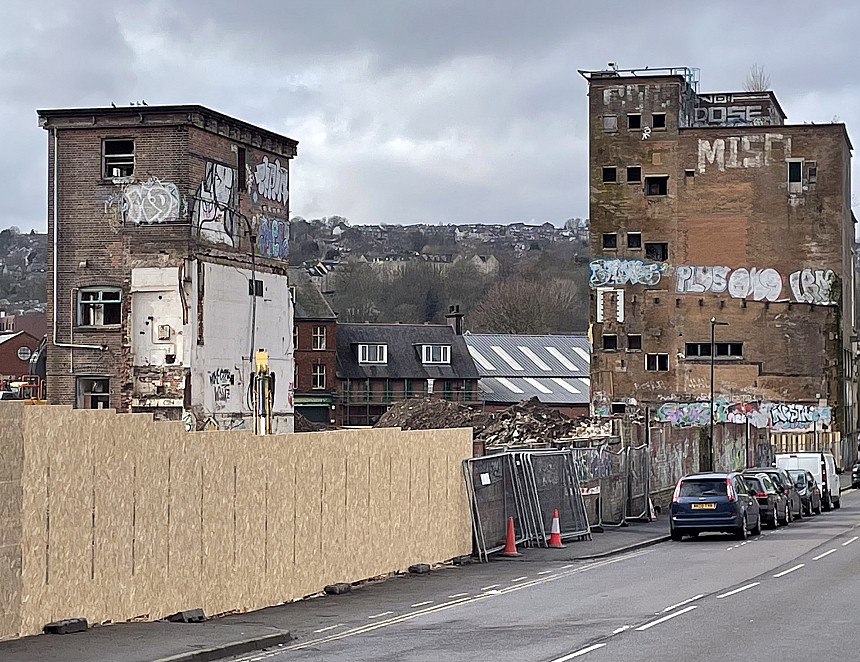
Demolition of the Cannon brewery in Neepsend, Sheffield, home of Stones Bitter, has begun, bringing an end to a significant chapter in the city’s brewing.
The brewery (above) closed almost 30 years ago, in 1999, when Bass acquired its Burton-on-Trent neighbour, Ind Coope, and decided its Sheffield brewery was surplus to requirements.
The Cannon brewery was named in 1868 by William Stones (1826-1894) and was purchased by Bass Charrington in 1968. William started brewing in 1847 with Joseph Watts. Following Watts’ death in 1854, Stones continued. In 1868 he bought the lease of the brewery of Shepherd, Green and Hatfield (the Neepsend brewery), renamed it the Cannon brewery and continued to brew there until his death. Shortly afterwards, the company was registered as William Stones Ltd. This success saw him become one of the richest men in Sheffield.
Stones Bitter was introduced by head brewer Edward “Ted” Collins in 1948. It was popular with Sheffield’s steel workers and was originally available across South Yorkshire, Derbyshire and Nottinghamshire. Increasing demand saw the beer brewed at other Bass breweries from the 1970s onwards. Distribution was extended to the rest of the North of England in 1977 and, accompanied by a considerable marketing push, nationwide from 1979.
The beer’s popularity reached its peak in 1992 when it was the country’s highest-selling bitter, selling more than a million barrels. In 1994-6, the Sheffield Gold campaign was set in a steel foundry: it was filmed in the Czech Republic because Sheffield’s own foundries were considered to be too clean and automated for the desired gritty, industrial effect. The beer has been lauded as “one of Sheffield’s most famous exports”.
When it closed, the site consisted of buildings of differing ages, character and size, clustered round a large triangular internal courtyard. Little of the original Victorian and Edwardian buildings remained, just the water tower and some internal features. In August 2024, Capital and Centric obtained hybrid planning permission. Its outline plans included the repurposing of several buildings, new builds of cultural and workspaces and more than 500 homes, a public square and an urban park.
Image: Dave Pickersgill