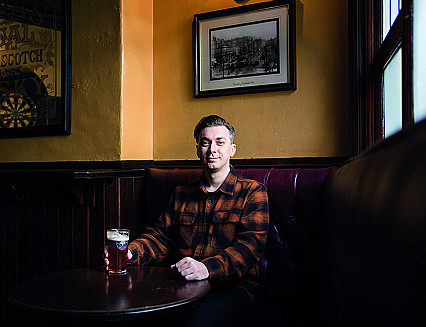





It was a battleship-grey January afternoon but the mood for one man inside the pub was even more ashen. While the fruit machines luridly flashed and laughter undulated at the bar, his expression remained fixed, a pained gargoyle at odds with the technicolour background.
I shattered the silence with a simple opening: “I’m sorry for your loss.” At first, he was startled but then he realised I’d overheard his attempts to tell the bartender that his dog had died. “I have mental health problems and my Staffy, well, he was my best friend.”
I’m not sure how much I helped but I listened to his love for his pet and how he felt pain after having taken it to the vet for the last time a few days ago. Two heartbeats in his house had become one. He’d been indoors for a week, and this was the only place he felt comfortable showing his face – somewhere he would hopefully find some companionship.
When he left after his second pint I began to think about how fortunate I was to have a loud, full house as you’d expect with someone gifted with a young family. And it’s a gift that I’ve recently felt is something that can easily – but shouldn’t ever be – taken for granted.
It’s natural to believe that death is something that only the old have to deal with, but news shocked us when a child in our community, the same age as my youngest, died in his sleep. No one puts a five-year-old to bed expecting him not to wake up in the morning.
The pub would seem like an odd place to deal with such subjects but as our local high street shrinks and hubs, such as libraries and community centres, close pubs are perhaps the only place for social cohesion left. If I took my pain to a local bookmaker or a Tesco Metro then I’d probably be ridiculed – perverse, considering how much taxation they don’t pay especially compared to pubs.
But working through death in pubs is a leitmotif. Last month, I visited the Three Hounds micropub in Beckenham at opening time and the one lovely customer there was telling me how he manages with his two kids after his wife died of cancer a few years ago. His explanations of how he survived the tragedy and looked after his kids successfully, were punctuated by the support the owner, Matt Walden, gave him.
Matt would never tell me about this kind of relationship – he’s far too modest – but I suspect this role isn’t rare and he cares for his community as much as his many beer lines he offers. Even though it’s not all about the beer, it is fabulous.
And herein lies the horrible conundrum we find ourselves in 2026. If we view pubs as just places to sell pints then – yes – why do they deserve more protection than other struggling businesses? But if you actually sit in a pub and see the community cohesion in work then you realise a key part of our resilience as a nation needs to be preserved.
Because there’s going to be nowhere to deal with death when the pubs die.