



-popup_image.jpg)

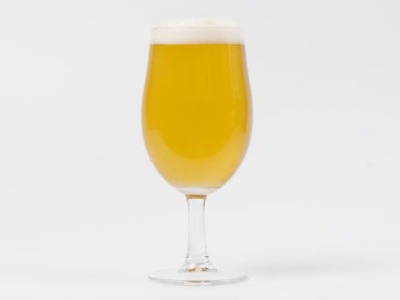







West Yorkshire’s Ossett brewery has released a nitrogenated version of its popular golden ale White Rat.
Launched in March at Leeds pub-of-the-moment, the Highland Laddie, it marks something of a departure for a brewery best known for cask-conditioned beers like Silver King pale ale and Butterley bitter.
Ossett, which describes itself as being “relentlessly progressive” was established in the Brewers Pride pub (now the Brewers 1841) in 1998. Through gradual expansion, along with the acquisition of several other Yorkshire-based brewpubs, it has now positioned itself as a national brand, with beers available nationwide via both the on and off-trade.
It acquired the Rat brand when it purchased Huddersfield’s Rat brewery, along with associated pub the Rat and Ratchet, in 2004. Although White Rat itself didn’t emerge from its nest until 2011. After trials of a beer first called Lab Rat – a zesty, 4 per cent pale beer designed to slake the thirst of even the most parched Yorkshire citizens – it was given the name it’s known by today and has since become Ossett’s flagship brand.
In 2026 it was given a thoroughly modern rebrand, featuring bold and bright, graffiti-style artwork. The Rat range has also been expanded and now features Hell Rat, a helles-style lager, Fat Rat, a pistachio and cherry stout, and King Rat, a strong and contemporary hazy IPA.
The nitrogenated version of its core White Rat offering is the latest addition to the range, which, following a successful launch in Leeds, is now appearing in further pubs across the north. In Manchester the beer is being advertised heavily, with posters appearing on billboards across the city. The beer is currently available on draught at train station pubs: the Piccadilly Tap, Oxford Road Tap, and Victoria Tap. It’s in the latter where I finally got to give the latest version of this beer a try.
Before I give my verdict on this new iteration of White Rat, I should confess I adore the cask version. It sits in that specific vein of “pale and hoppy” beers that combine the drinkability that I feel only cask conditioning can offer; alongside a distinctly bitter and citrus-led flavour I find irresistible. It’s a quality shared in similar beers that appeared around the same time: Fyne Ales Jarl and Oakham Citra. Notably, it was in 2011, when all of these beers were first released, that the North American Citra hop variety (now the most cultivated variety in the world) also became commercially available for the first time.
Why nitro, though, and why now? Well unless you’ve been hiding under a rock for the past couple of years, you will have noticed that nitrogenated beers are having a moment. Guinness has risen to become the UK’s favourite beer, and it is now its best-seller by value. Fascinatingly, beers like Guinness, plus similar nitrogenated stouts including Murphy’s and Beamish are also very popular with the youngest generation of drinkers.
Several small breweries have certainly noticed this trend and have jumped on the bandwagon with nitrogenated beers of their own. London’s Anspach and Hobday has found great success with its London Black porter, and others, including Bristol’s Left Handed Giant and Leith’s Campervan brewery have followed suit with similar beers.
Interestingly, we’re also seeing the re-emergence of nitro-dispensed brands that at one time could have ostensibly be referred to as failures. I struggled to contain my shock when I spotted the Molson Coors owned Caffery’s back on the bar – especially as it wasn’t the red ale I remembered from my youth, instead reincarnated as a 3.4 per cent stout. Trying it out of morbid curiosity, much like my first taste in the late 1990s, it failed to either satisfy or delight.
It cannot be denied, however, there is a certain appeal to the smooth and creamy dispense that nitrogen offers, and it is absolutely something younger drinkers are being drawn towards.
What’s interesting about White Rat appearing on nitro dispense is that it’s not a stout. Perhaps Ossett is gunning for the taps occupied by pale beers that may or may not be falling out of favour. Beavertown’s Neck Oil and Camden’s Pale Ale come to mind. But, most importantly, is the beer actually any good?
Well, yes, actually. That’s a silly question. It’s Ossett White Rat, after all. This keg-dispensed, smooth-flow iteration retains the dry, hop-forward snap and inherent drinkability that makes it so appealing, albeit with the creamy, smoothness that nitro-dispense offers.
What it is not, however, is as good as the cask version. It goes without saying that, when served in peak condition, a proper pint of White Rat, served via beer engine and pulled through a tight sparkler, is unbeatable – and dare I say, even smoother and creamier than the nitro version. The question is whether the nitro version will win over said younger drinkers and convert them into cask drinkers, or if it’s simply an opportunity to be exploited until the nitro bandwagon once again runs out of steam.