


-popup_image.jpg)




The Campaigns and Communications team brings the latest news on its campaigning for pubs, pints and people across Westminster, devolved parliaments and local government.
Westminster
Planning (England)
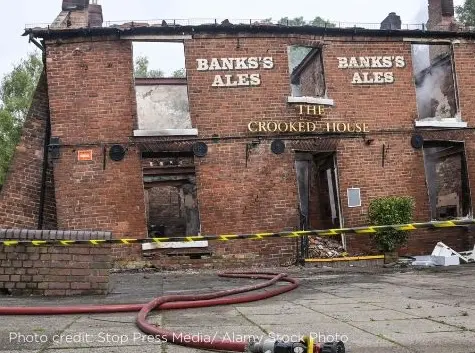
The UK government has made proposed changes on its National Planning Policy Framework which could see only the last pub in an area in England protected, instead of all pubs, which are currently legally covered.
The team has made an official submission to the government’s consultation against weakening these policies of pub protection. Read it here.
It has also written to planning minister Matthew Pennycook MP asking for a meeting to talk about our concerns.
CAMRA’s MP e-lobby continues while the minister reviews consultation responses. Email your MP here.
Assets of Community Value (England)
The English Devolution and Community Empowerment Bill is in its final stages of the parliamentary process before becoming law.
This bill will deliver the Community Right to Buy scheme, which will replace the Community Ownership Fund axed by government in 2024.
Baroness (Kate) Hoey submitted an amendment which would mean councils could compulsorily purchase a community asset, at market value, where there is a disagreement between the owner of the land and the community buyer.
This disagreement would be over the value of the land or site, and where the asset of community value is in danger of being lost; or where the owner won’t sell.
Disappointingly the amendment was not supported in the House of Lords. CAMRA will continue to lobby government to make the Community Right to Buy scheme as effective as possible, and for a dedicated funding stream for communities looking to take over ownership of their pub, following the cancellation of the Community Ownership Fund.
Cask beer and Fresh Ale
Derby South MP Baggy Shanker secured a parliamentary debate on cask beer: “That this House has considered protecting consumers and promoting cask ale by recognising its production and serving as Intangible Cultural Heritage.”
MPs can discuss the importance of cask beer, getting it listed as Intangible Cultural Heritage under UNESCO, and the misleading dispense of kegged beers through traditional cask handpulls, like Carlsberg’s 'Fresh Ale'. The debate has yet to be scheduled.
Read the transcript of Baggy Shanker MP’s bid for parliamentary time for the debate here and CAMRA’s media comment here.
Sharp’s brewery closure
North Cornwall MP Ben Maguire, who CAMRA has worked with, submitted several Parliamentary Questions after the closure of Sharp’s.
These questions have now been answered:
Q: Ben Maguire: To ask the secretary of state for Business and Trade, what assessment he has made of the potential impact on consumers of breweries (a) stating and (b) implying that their products are being brewed in one location when they are produced in another location.
A: Kate Dearden (minister for Business and Trade): The Department for Business and Trade has not made a specific assessment of the potential impact on consumers of breweries misleading them on where their products are brewed. The Digital Markets, Competition and Consumers Act 2024 prohibits unfair commercial practices, including misleading actions, that are likely to impact the average consumer’s transactional decision. This could include breweries misrepresenting where their products are produced. Misrepresentation may be taken as an unfair trading practice and constitute an offence.
Q: Ben Maguire: To ask the secretary of state for Business and Trade, whether his Department has made an assessment of the level of prevalence of multinational companies marketing (a) beers and (b) brewery brands as being from (i) small and independent brewers and (ii) from a specific geographical location.
A: Kate Dearden (minister for Business and Trade): The Department for Business and Trade has not made a specific assessment of the level of prevalence of multinational companies marketing beers and brewery brands as being from small and independent brewers or from a specific geographical location. The Digital Markets, Competition and Consumers Act 2024 prohibits unfair commercial practices, including misleading actions that are likely to impact the average consumer’s transactional decision. This could include multinational beverage companies misrepresenting where their alcohol products are produced. Misrepresentation may be taken as an unfair trading practice and constitute an offence.
Q: Ben Maguire: To ask the secretary of state for Environment, Food and Rural Affairs, what assessment she has made of the potential impact of the proposed closure of Sharp's brewery in Rock, North Cornwall on (a) jobs, (b) the local economy and (c) consumer choice.
A: Angela Eagle (minister for Environment, Food and Rural Affairs): Defra has not completed an impact assessment regarding the proposed closure of Sharp’s brewery. Molson Coors are conducting a consultation process on this proposed closure, and no further decisions will be made until this has finished. The department remains in regular contact with Molson Coors on this matter.
Q: Ben Maguire: To ask the secretary of state for Culture, Media and Sport, what assessment her department has made of the potential impact of local and regional (a) breweries and (b) beer brands on the tourism economy in (i) Cornwall and (ii) England.
A: Stephanie Peacock (minister for Culture, Media and Sport): The government recognises the vital role of breweries and beer brands in both local communities and the attractiveness of the UK as a visitor destination. While DCMS has not made a formal assessment, we continue working with other government departments to ensure that targeted support is provided for the sector. The government is committed to helping breweries grow through exports and supports all businesses, including exporters, via the new Business Growth Service which has integrated our support in a single, accessible platform, designed to help businesses across the UK start, scale, and succeed globally. The chancellor also announced in January that pubs will get a 15 per cent cut to new business rates bills from April followed by a two-year real-terms freeze. The government also provides showcase opportunities for the British beers such as at embassy tastings, trade missions and global trade shows that connect producers directly with buyers and distributors. Breweries of all sizes can also access UK Export Finance (UKEF), which offers a wide range of financial products to support exporters and export-ready businesses. The forthcoming Visitor Economy Growth Strategy will set out a long-term plan to increase visitor flows across the UK, boost value, and deliver sustainable growth. Central to this strategy is the delivery of greater regional dispersal, ensuring that visitor income is spread effectively across regional destinations, including rural and coastal communities.
Q: Ben Maguire: To ask the secretary of state for Environment, Food and Rural Affairs, if he will take steps to ensure that details of (a) the geographical location of production and (b) ownership of brands is included on (i) labels and (ii) point of sale materials for (1) beer and (2) other food and drink products.
A: Angela Eagle (minister for Environment, Food and Rural Affairs): The UK aims to maintain high standards on the information that is provided on food labels. All food sold on the UK market must comply with food labelling rules, which include the requirement for the name and address of the food business operator that is responsible for the food. Food origin information is mandatory for some, but not all foods. It is not required for beer products, but many producers in the UK state where the beer is brewed. If there is a recognised regional style of beer, it may be possible to protect that heritage through the geographical indications scheme. In any case, where an indication of origin or provenance is given on food and drink, either in words or pictures, this must be accurate. The government has no current plans change country of origin rules. The ownership of brand is not required under food labelling rules.
Q: Ben Maguire: To ask the secretary of state for Environment, Food and Rural Affairs, what assessment she has made of the potential merits of introducing a geographic indication scheme for beers traditionally brewed in a specific location.
A: Angela Eagle (minister for Environment, Food and Rural Affairs): The government recognises the economic and cultural importance of geographical indications (GIs) and remains committed to ensuring their continued protection. The family of UK produced GIs already includes beer – Kentish Ale, Kentish Strong Ale, and Rutland Bitter, in addition to East Kent Goldings, a variety of hops used in the production of beers and ales. Those are proudly produced to specific recipes and processes in a defined place, and the government welcome applications for GI protection from producers of other beers.
Scottish government and parliament
Planning (Scotland)
CAMRA has had a campaign victory for pub protection in Scotland.
The Scottish government launched a consultation on improving Community Right to Buy legislation last July, which CAMRA responded to in October.
The plan to introduce permitted development rights, which would let any town or city-centre building be converted into a house without planning permission, has now been scrapped by the Scottish government.
98 per cent of respondents were against the plans, mainly due to the impact changes would have on pubs and music venues, so the Scottish government has dropped the proposal, stating: “After carefully considering all of the responses received we have decided not to make changes to permitted development rights at this time.”
More information on the Scottish government website here.
Scottish parliament elections
The main political parties have now published their manifestos ahead of the elections on 7 May. You can see a round-up of what each party is offering on issues facing consumers, beer and pubs here.
Welsh parliament and Senedd Cymru
Senedd Cymru / Welsh parliament elections
The main political parties have published their manifestos ahead of the elections on 7 May. You can see a round-up of what each party is offering on issues facing consumers, beer and pubs here.
Northern Ireland assembly and executive
Northern Ireland licensing review
Last month Belfast night-life charity, Free the Night, took legal action against the NI minister for Communities after he rejected most of the University of Stirling’s recommendations made after it carried out an independent review of NI’s alcohol licensing, including the outdated surrender principle.
CAMRA continues to support Free the Night and legal actions taken. CAMRA Northern Ireland director Ruth Sloan signed Free the Night’s open letter to the first minister and deputy first minister calling for a rethink on modernising alcohol licensing laws.
Sign the letter here.
Read CAMRA’s response here.